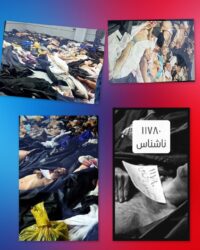
Reports and mounting evidence from inside Iran paint a horrifying picture of what unfolded during the nationwide protests of the year 1404 (2025). What occurred can no longer be framed as “security operations” or “crowd control.” According to multiple internal sources, human rights networks, visual documentation, and testimonies from families of victims, nearly 12,000 Iranian citizens are believed to have been killed during the suppression of the protests—an estimate that, if independently confirmed, would constitute one of the bloodiest state crackdowns on civilians in Iran’s modern history.
This wave of lethal repression has taken place against the backdrop of one of the worst economic crises Iran has faced in decades. Runaway inflation, the collapse of the national currency, widespread unemployment, and deepening poverty have left millions unable to meet basic needs such as food, housing, and healthcare. The protests, therefore, did not emerge from political agitation alone, but from systemic deprivation, despair, and accumulated public rage.
Images of Death: Visual Evidence of Systematic Violence
The photographs and videos that have emerged in recent weeks are unprecedented in their brutality. They show bodies piled together in morgues and large halls. Other footage, reportedly recorded inside forensic medicine facilities, shows officials presenting photographs of corpses to families in order to identify missing relatives.
In numerous cases, families report that they were denied the return of bodies, pressured into silence, or refused official death certificates. Visible marks on many of the victims indicate gunshot wounds, severe beatings, torture, and deaths in detention, raising serious concerns over systematic violations of the right to life and the absolute prohibition of torture under international law.
Repression Beyond Borders: Alleged Role of Foreign Militias
Equally alarming are reports suggesting the involvement of foreign or transnational armed groups, including forces affiliated with Iraq’s Popular Mobilization Forces (Hashd al-Shaabi) and Lebanon’s Hezbollah, in supporting or participating in the suppression alongside Iranian security forces.
If substantiated, such involvement would represent a grave escalation: the use of non-national militias to suppress domestic civilian protests. This would not only undermine Iran’s own claims of sovereignty but would also significantly expand the scope of international legal responsibility for crimes committed during the crackdown.
Protesters Met with Bullets, Not Dialogue
According to eyewitness accounts and available reporting, demonstrators voiced basic and universal demands:
bread, employment, dignity, and a future.
The response from the authorities, however, was not negotiation or reform, but live ammunition, mass arrests, enforced disappearances, and death.
Simultaneously, domestic media were silenced, journalists intimidated, families of the victims threatened, and access to the internet repeatedly disrupted. These actions appear aimed at erasing evidence and suppressing collective memory, rather than addressing the roots of public anger.
An Unprecedented Digital Blackout: The Silence of Starlink
Adding to the gravity of the situation is a deeply troubling development: reports indicate that Starlink satellite internet access has been effectively cut off across Iran, eliminating one of the last remaining tools for independent communication and documentation.
This development is particularly striking because Starlink has long been considered resilient against state-imposed internet shutdowns, especially in authoritarian contexts. Its apparent nationwide disruption has therefore triggered widespread concern and speculation among journalists, technologists, and digital rights advocates.
Some observers suggest that the Islamic Republic may have developed advanced cyber or electronic warfare capabilities capable of interfering with satellite-based communications. Others raise questions about potential vulnerabilities, external pressure, or indirect forms of cooperation within the broader technological ecosystem. While no definitive evidence has yet been publicly confirmed, the reality remains clear: a system designed to bypass censorship fell silent at the precise moment it was most needed.
If verified, this would mark a dangerous global precedent—demonstrating that even satellite internet networks may be vulnerable to authoritarian reach, and that censorship can now extend beyond national borders and into space-based infrastructure.
The consequences have been immediate and severe. The flow of images and eyewitness reports has slowed dramatically; families searching for missing loved ones have been further isolated; and the ability of the international community to independently verify events on the ground has been critically undermined.
Accountability, Truth, and Memory
If the reported evidence is confirmed, what unfolded in Iran in 1404 is not merely a political crisis or a security operation, but a large-scale humanitarian and human rights catastrophe. It demands urgent, independent, and transparent international investigation.
Bodies may be buried, names concealed, and voices silenced—but truth does not disappear. History has repeatedly shown that no government secures its future by killing its own people, and no crime of this magnitude remains hidden forever.
Iran today is wounded and in mourning. And a wound left without justice does not heal—it deepens, and ultimately returns as an even more powerful demand for truth and accountability.


هنوز نظری ثبت نشده است. شما اولین نظر را بنویسید.