An Open Letter by an Iranian Professor of Philosophy in Defense of Iran’s Territorial Integrity
In Response to the EU–[P]GCC Joint Statement and Its Unfounded Claim Regarding the Iranian Islands of Greater Tunb, Lesser Tunb, and Abu Musa (October 2025)
In the name of Truth, Justice, the Dignity of Nations, and Mutual Respect among Them
To the Foreign Ministers of the Member States of the European Union and the Persian Gulf Cooperation Council,
With due respect,
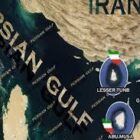
As a professor of philosophy who has spent decades teaching and writing on the foundations of ethics, rationality, justice – both nationally and internationally – and intercultural dialogue, I have read with profound surprise and concern your recent joint statement (early October 2025). In the clause referring to the Iranian islands of Greater Tunb, Lesser Tunb, and Abu Musa, the statement regrettably employs the misleading term “occupation” and describes these islands as “belonging to the United Arab Emirates.”
Such a position is not only devoid of historical and legal validity but also inconsistent with the moral principles of justice, mutual respect, and political rationality.
As an independent and nonpartisan scholar, bound by no political institution but devoted to truth and justice, I find it necessary to remind you of six fundamental points:
1. From a Historical Perspective: The Irrefutable Continuity of Iran’s Sovereignty
From centuries preceding British colonial involvement in the Persian Gulf through the dynasties of the Safavids, Afsharids, Zands, and Qajars, abundant historical records, official maps, and geographical documents attest to Iran’s continuous sovereignty over the islands of Greater Tunb, Lesser Tunb, and Abu Musa.
Even in the official reports of the British India Office, these islands were recognized as part of the “Persian coast.”
In 1971 – prior to the formal establishment of the United Arab Emirates – the British government, which had briefly administered these islands during its colonial presence, formally restored their sovereignty to Iran.
Thus, both historically and legally, these islands have remained within Iran’s natural and continuous territorial jurisdiction, not under the possession of any other state.
2. From the Perspective of International Law: Continuity of Sovereignty and the Illegitimacy of the UAE Claim
Under international law, the principle of continuity of historic sovereignty affirms that territories belonging to an existing state prior to the creation of a new one cannot be transferred to that new state without explicit consent.
The doctrine of uti possidetis juris likewise ensures that pre-independence territorial boundaries remain legally binding.
As the islands were under Iranian sovereignty in December 1971, when the UAE was established, there exists no legal basis whatsoever for a new claim of ownership.
Accordingly, the use of the term “occupation” in your statement is incorrect, unlawful, and unjust – contradicting both the Charter of the United Nations and the fundamental principle of respect for the territorial integrity of states.
3. From the Perspective of Political Philosophy and Global Ethics
In global moral philosophy, no political claim is legitimate without honesty in historical reference and fidelity to the principle of ethical justice.
When regional or global powers exploit a country’s internal difficulties to weaken its national sovereignty and bolster baseless territorial claims, they undermine the moral foundations of peace, mutual respect, dialogue, and independence among nations.
Peace endures only when founded on truth and justice; no durable peace can emerge from historical distortion or the denial of a people’s rightful heritage.
4. From the Perspective of the Ethics of Peace and Dialogue
Iran – despite changes in its political administrations – has consistently demonstrated willingness to engage with its neighbors on the basis of mutual respect and shared interests.
The duty of regional and global organizations is to foster honest dialogue and prevent the amplification of misunderstanding, not to deepen historical tensions through partisan positioning.
The philosophy of global ethics emphasizes that political relations must rest on universalizable behavior and rational, equal dialogue – not on the exploitation of fragile circumstances or political pressure.
5. Against the Exploitation of Iran’s Current Situation
It is true that Iran, like many nations, faces internal and external social and political challenges.
However, no state or institution has the moral or legal right to use such circumstances as an opportunity to undermine the historical rights or territorial integrity of the Iranian nation.
Such behavior is not only unethical but a violation of the fundamental international principle of non-intervention.
Regardless of transient political conditions, Iran remains the enduring homeland of an ancient nation whose borders are embedded in the world’s geographic and cultural memory.
From Elam to the present day, the Iranian people have grounded their identity in independence and dignity.
No regional or global power has the right to ignore this historical continuity.
Any repetition of baseless claims over Iran’s islands constitutes an affront to the historical memory of the Iranian nation and a violation of the very moral principles upon which Western philosophy itself is founded – principles such as honesty in judgment, respect for legitimate sovereignty, and the rejection of opportunism
6. From the Perspective of the Ethical Responsibilities of International Institutions
The European Union – born from the painful experience of war and occupation in the twentieth century – should, more than any other body, understand the meaning of legitimate sovereignty and the inviolability of national independence.
Lasting peace can be built only on truth and mutual respect, not on expedient political calculations.
The Gulf Cooperation Council, if genuinely committed to regional stability and security, must refrain from provocative and legally groundless positions.
Instead of reviving baseless territorial claims, it should promote genuine cooperation on issues such as environmental protection, human security, and sustainable development.
No regional stability can be achieved without historical justice, good-neighborliness, and respect for the territorial integrity of all nations.
Final Reflection
Honorable Foreign Ministers of the European Union and the Gulf Cooperation Council,
As a philosopher of philosophy who believes in rational humanism and global justice, I affirm unequivocally:
The islands of Greater Tunb, Lesser Tunb, and Abu Musa have always been, and will remain, integral parts of Iranian territory.
No political statement or diplomatic consensus can alter this historical and legal truth.
True peace finds meaning only when founded on the dignity of nations, on justice, and on mutual respect.
I urge you to abandon the language of political opportunism and speak instead the language of reason, ethics, and history.
Defending an unfounded claim deepens mistrust among the peoples of this region, while respect for truth can become the cornerstone of a lasting and humane peace.
With renewed respect,
Musa Akrami
Professor of Philosophy
Friday, October 10, 2025, the 18th of Mehr 1404
****
If you like this text, please share it with your interested friends 🌹

هنوز نظری ثبت نشده است. شما اولین نظر را بنویسید.