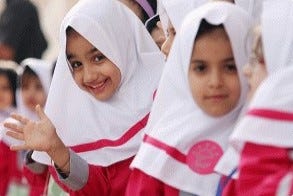
Children wearing hijab in a non-secular country [14]
1. Growing up in a non-secular country
I am an Iranian woman. In my country, before the establishment of an Islamic republic (a non-secular government) in 1979, women were gaining their rights along with women in other countries, but now (in 2021) under a non-secular government, “Gender Inequality Index” is 0.492 [1].
2. Gender Equality
Gender equality is the situation in which people are treated without considering their gender. Equal access to world resources and facilities, equal access to educational and employment opportunities, equal access to healthcare, having the right to live in dignity, freedom of thought and action, protection from violence are some of the most important issues of gender equality topic. To achieve people-centered development, all genders should be taken into consideration.
As mentioned, equal access to employment opportunities is one of the most important issues of gender equality topic. In [2], Evans explains the positive impact of female employment on gender equality in rural Cambodia but says: “City dwellers are more likely to support gender equality in education, employment, leadership, and leisure.” She concludes that, although female employment is an important factor on gender equality in rural areas but gender equality is improving slowly in rural
areas because women in rural areas do not share their knowledge and experiences so much.
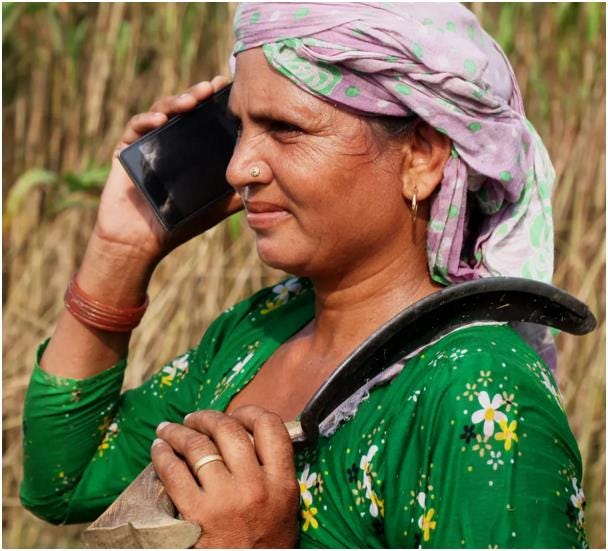
I think women in rural areas can share their knowledge using social networks. Providing cheap mobile phones and easing access to internet in rural areas, women in rural areas can easily communicate with other women in the same area or other areas. Northern Michigan University and some large companies (like Intel, Google, and Facebook) have different programs to make it easier to access the internet [3].
3. Laws in Non-secular Countries
To achieve gender equality in every country, some laws must be changed. I think one of the most difficult situation activists have faced is fighting for gender equality in non-secular countries where some of the laws has been made based on religion. Sometimes, fighting for changing laws in this situation can lead to death.
Gender inequality is declining in many countries [2]. But some countries like Turkey, are going backward on gender equality. It seems that the President Erdogan’s interpretation of Islam has a negative impact on gender equality [4].
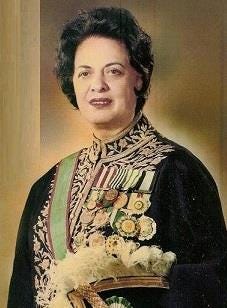
The establishment of the Islamic regime (a non-secular regime) in 1979 in Iran also had an awful impact on women’ lives in Iran. Before the establishment of the Islamic regime in 1979, women were gaining their rights gradually and they could work in any occupation [5]. The first woman to serve as a minister was Farrokhroo Parsa (In the following, a photo of her is shown [6].). She was appointed as minister of education in 1968 [7] (but now, in 2021, there is no female minister in the cabinet.).
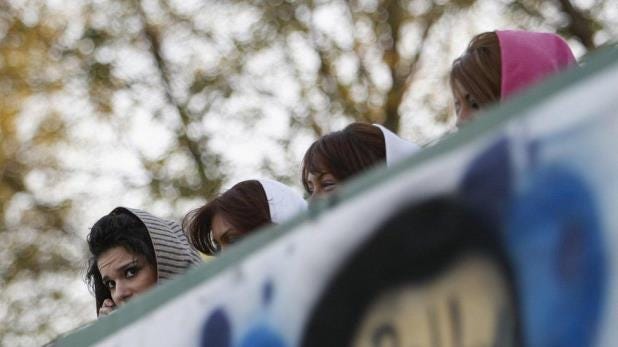
After the establishment of the Islamic regime (a non-secular government), Iranian women lost some of the basic rights. For instance, after the establishment of the Islamic regime, wearing a hijab (headscarf) was made obligatory, women were banned from working in some of career fields (for example: judgement) and the minimum legal age for marriage of girls was lowered from 18 to 13. However, the struggle for gender equality continues despite probable punishments [8]. In the following, a photo of women wearing hijab can be seen [9].
4. Development
Development is the process of making a better life for all people in the world. Economic development, social development, political development and environmental development are some of the important measures that can be taken into consideration to measure the level of development of a country. There are different approaches to achieve development. To find the best way to achieve development in a country, it is important to consider the local and specific contexts in that country [10]. As mentioned
in [11], one of the main factors in the development process is a powerful national government acting according to the public interest of the majority population.
The goal of development is to make a better life for all human beings. Then the first step of development process should be to improve the quality of life for all genders. Besides that, gender equality leads to economic growth. In Europe, support of gender equality cause an additional 10.5 million jobs in 2050, an increase in EU (GDP) per capita by 6.1 to 9.6%, which amounts to €۱.۹۵ to €۳.۱۵ trillion [12]. Economic development is an important component of development.
Support of gender equality also makes all genders happier and happier mothers have happier children [13].
5. Conclusion
Gender equality is the situation in which people are treated without considering their gender. To achieve gender equality in every country, some laws must be changed. One of the most difficult situation activists have faced is fighting for gender equality in countries where some of the laws has been made based on religion (under non-secular government). Sometimes, fighting for changing laws can lead to death in these countries. Is it really possible to achieve gender equality in non-secular countries? I do not think so.
References
[1] 2019. “Human Development Indices: A statistical update 2019”. United Nations Data. Programme http://data.un.org/DocumentData.aspx?id=415
[2] Evans, Alice. 2019. “How Cities Erode Gender Inequality: A New Theory and Evidence from Cambodia.” Gender & Society 33 (6): 961–۸۴.
[۳] “In India, Smartphones and Cheap Data Are Giving Women a Voice”.
https://www.wired.com/story/india-smartphones-cheap-data-giving-women-voice/
[4] Wagner, Magdalen. Spring 2016. “The Decline of Women’s Rights in Turkey: Is it Political Islam…or Tayyip?”. University of Colorado, Boulder.
[5] Esfandiari, Haleh. 2010. “The Women’s Movement”. United States Institute of Peace.
https://iranprimer.usip.org/resource/womens-movement
[6] TIMENOTE, global virtual culture-historical encyclopaedia. “Farrokhroo Parsa”.
https://timenote.info/en/Farrokhroo-Parsa
[7] Wikipedia, the free encyclopedia. “Farrokhroo Parsa”.
https://en.wikipedia.org/wiki/Farrokhroo_Parsa
[8] Hoodfar, Homa. 2009. “Against All Odds: The Building of a Women’s Movement in the Islamic Republic of Iran”.
https://assets.publishing.service.gov.uk/media/57a08b5be5274a31e0000aee/Hoodfar_AgainstAllOdds_Iran.pdf
[9] BBC News. 2019. “Iranian women — before and after the Islamic Revolution”.
https://www.bbc.com/news/world-middle-east-47032829
[10] Hopper, Paul. 2018. “Theorizing Development.” In Understanding Development, 2nd ed., 47–۷۴. Cambridge & Malden: Polity Press.
[11] Polanyi Levitt, Kari. 2018. “History from a Critical Development Perspective.” In The Essential Guide to Critical Development Studies, edited by Henry Veltmeyer and Paul Bowles, 31–۴۷. New York: Routledge Taylor & Francis Group.
[12] European Institute for Gender Equality. https://eige.europa.eu/gender-mainstreaming/policyareas/
economic-and-financial-affairs/economic-benefits-gender-equality
[13] Audette, Andre. 2019. “Gender Equality Supports Happiness and Well-Being.” The University of Minnesota. https://genderpolicyreport.umn.edu/gender-equality-supports-happiness/
[۱۴] https://www.hra-news.org/interviews/a-55/


نظرات
This is an incredibly erroneous piece, since it forgets how Shah was the incubator of the Islamic Republic of Hell.
It’s also not mentioned how Farokh Roy Parsa had also hired Ayatollah Beheshti in shah’s Dept. Of Education
All & all this “text” has the traces of a SAVAK hit job to rehabilitate monarchy.
Secularism without Socialism without social justice is impossible.
Secularism without Socialism & social justice has led to the rise of extremist religious movements: such as Christian Nationalism in the US.
یکشنبه, ۱۳ام آبان, ۱۴۰۳